
GHC’s Welding Technology degree degree is one of the most comprehensive welder training programs of study, in terms of curriculum content and training hours available, in the United States. We offer three Associate in Technology – Welding Technology degree emphasis options: Structural Welding, Construction Welding, and Pipe Welding. Each option provides foundational skills in welding, cutting, gouging, blueprint reading, welding symbols, layout, measuring, fabrication, and applied math. Appropriate work habits and work ethic are highly emphasized.
The 7-quarter Structural Option, which is 133 credits and includes 1,947 hours of welding course content, is our base multi-process program. It contains a mixture of the most common welding, cutting, and gouging processes including:
- Shielded Metal Arc Welding (SMAW) with F1, F2, F3, and F4 group electrodes
- Gas Metal Arc Welding (GMAW) in spray transfer mode
- Gas Metal Arc Welding in Short circuit transfer mode (GMAW-S)
- Gas Metal Arc Welding in Pulsed spray transfer mode (GMAW-P)
- Alternating Current Gas Tungsten Arc Welding (GTAW) including advanced controls
- Direct Current Gas Tungsten Arc Welding (GTAW) with and without an Argon purge, and using Solar Flux
- Flux Cored Arc Welding Gas-shielded (FCAW-G)
- Flux Cored Arc Welding Self-shielded (FCAW-S) with E71T-8 and E71T-11 electrodes
- Oxygen Fuel Cutting (OFC) with multiple fuel gases
- Plasma Arc Cutting (PAC)
- Air Carbon Arc Cutting (CAC-A)
Welding, cutting, and gouging are conducted in all positions: flat, horizontal, vertical, and overhead. Pipe is welded in the 2G, 5G, and 6G positions. Base metals types are steel, stainless steel, and aluminum. Material shapes are sheet, plate, angle, round tubing, square tubing, and pipe. Machinery and some of the tools used include overhead crane, horizontal and vertical band saws, abrasive / chop saw, cold saw, belt sander, tubing notcher, drill press, sheet metal shear, press brake, pan brake, mechanical and thermal pipe beveling machines, track cutter, porta-band saws, circular saws, angle grinders, die grinders, pneumatic chisels, and thread taps.
The base program contains a substantial amount of destructive testing:
- Fillet weld break tests
- Tensile pull tests
- Side bend tests
- Lengthwise weld metal burn testing
The last quarter includes certification testing. Plate is tested in the vertical and overhead positions, pipe (if attempted) is tested in the 6G position.
The 8-quarter Construction Option, which is 149 credits and contains 2,211 hours of welding course content, is essentially the Structural curriculum but with one additional quarter dedicated exclusively to the self-shielded (gasless) Flux Cored Arc Welding process (FCAW-S), using E71T-8 electrode. This additional course adds full penetration, back-gouged and back-welded beam to beam and beam to plate connections, as well as pipe column connections using steel backing rings. Students who want to be eligible for an “A” will perform beam welding 17’ off the ground, while using fall protection. The FCAW-S welding process is used extensively in the construction of buildings and bridges. This process is very demanding skill wise, and the acceptance criteria for field welds with it are stringent.
While some FCAW-S is included in the base Structural curriculum, due to the high skill requirement, an average person who intends to make a living using this process doing evaluated code work, and/or who hopes to qualify through testing as a Seismic Restricted Access Welder, will want to opt for the extra training that is in the Construction option.
The 9-quarter Pipe Option, which is 165 credits and contains a total of 2,475 hours of welding course content, is one of the most comprehensive welder training programs of study in the United States. It is essentially the Structural curriculum but with two additional quarters that are dedicated exclusively to pipe welding. Additionally, the last quarter, which is qualification / certification testing, is conducted on pipe in the 6G position. This option includes approximately 1,320 hours of pipe focused training between its Code Welding, Pipe I, Pipe II, Pipe III, and Pipe Certification courses. In addition to more hours of open-root pipe welding and socket welding, some of the unique tasks added to the base program are face and root bend destructive testing, use of a pipe rotator, welding stainless steel to carbon steel, pipe welding using the Flux Cored Arc Welding process, and pipe welding using the Gas Metal Arc Welding process in the modified short circuit transfer, spray transfer, and pulsed spray transfer modes. There are assignments with restricted access as well.
Like code welding with FCAW-S, pipe welding demands a very high skill level. The acceptance criteria for it too are quite demanding. While a fair bit of pipe welding is included in the basic Structural curriculum, an average person hoping to make a living welding pipe, doing evaluated code work will want the extra training that is in the Pipe option.
For all options, in addition to a 5,250 square foot main shop area equipped with large welding booths (9’x8’ and 6’x6’), realism is added to training with a 3,000 square foot covered but open-air welding area. Much of this training area is serviced by an overhead crane. This allows students to perform material handling, working with up to 21’ sections of materials, rather than just working with the traditional small pieces of metal or “coupons” that are typically used for welder training. This open area also allows for learning to perform welding operations in the cold, wind, mist, etc.
GHC Welding is a Washington Association of Building Officials (WABO) approved Welder Qualifying Agency. Certification testing is proctored by an American Welding Society Certified Welding Inspector and WABO approved Welder Examiner.
With 133 credits in the Structural option, 149 credits in the Construction option, and 165 credits in the Pipe option, GHC offers one of the most thorough associate degree programs in welding available. Training is geared to provide the skill base, knowledge, and professional attitude required to eventually become a journey-level combination welder.
The GHC welding program offers several different certificates as well. The degree and most certificate programs are offered during daytime hours, Monday through Friday.
Beginning level night courses are also offered. Each includes multiple welding processes. They are intended primarily as support courses for our Auto, Carpentry, and Diesel program students, although enrollment is open to the general public as well. They can be a great choice for those that may be on the Waiting List to begin the high-demand daytime degree program, and that want to get a head start on their skill building. However, being only 6 credits each rather than 16 credits like the daytime welding degree courses, a night course will not substitute for a day course in the degree program. These beginning level night courses also do not include or lead to certification testing.
GHC Welding Shop Walkthrough
Employment Resources
Career Examples
- Journeyman Welder
- Pipefitter
- Boilermaker
- Ironworker
- Sheet Metal Worker
- Fabricator
Tara Clinton – GHC Class of 2025
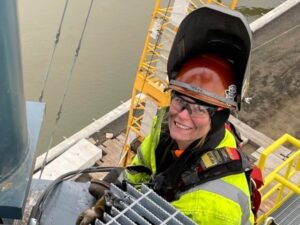
“I graduated from GHC in 2025 with my associate in welding technology. While taking that course students are provided the tools, both knowledge and physical tools, needed to gain the skills to become a great welder. I’m grateful that Rod has put so much heart into the curriculum to give students a well-rounded education for the trade. It’s up to you to stick to it and appreciate it for what it truly is, a big advancement for your future career! You will come out of that course with more knowledge than you expected to retain once you get into the “field”. I am currently working through Express for a company building the ship loader at the Port of Grays Harbor and was hired on the spot when I went in for an interview. It was my steppingstone to figure out if I wanted to do iron work. After this project is completed, my next step will be to apply to become a Union Iron Worker. Thank you, GHC staff, for all the help provided along the way!”
Ryan Anderson – GHC Class of 2025

“When I was a junior in high school, I decided to do the Running Start program at GHC. My interest in building things and working with my hands led me to join the welding program. I started the program in the fall of 2023 with very little welding experience. From the start, I was introduced to the wide range of welding and cutting processes used in the metal trades. During my time in the program, I developed a strong understanding of welding principles and learned how to safely and effectively use metal working equipment. Through hands-on experience and destructive testing, I learned how to produce welds with structural integrity that meet strict code criteria, simulating real on-the-job standards. My math skills improved significantly as I worked on complicated fabrication projects and applied math problems.
In 2025, I was honored to receive the “Welding Student of the Year” award. That same year, I completed the Course and received my Associate in Technology Pipe Welding degree. During my final quarter, I also earned 11 WABO welding certifications, including 4 all-position pipe qualifications and 3 seismic qualifications for structural steel. I am entirely grateful for my time learning from my professors, Rod and Chris, who have taught me invaluable skills and encouraged me to push myself and improve every day. Near the end of my final quarter, a welding job opportunity arose at the Port of Grays Harbor. I applied and was hired right away. I am currently working for a company called Agrico, building ship loaders at the port, where I use what I’ve learned every day at work. I highly recommend attending GHC to anyone who is looking to start a career in trades, as it thoroughly prepares you for success in your desired career.”
Andrew Benson – GHC Class of 2024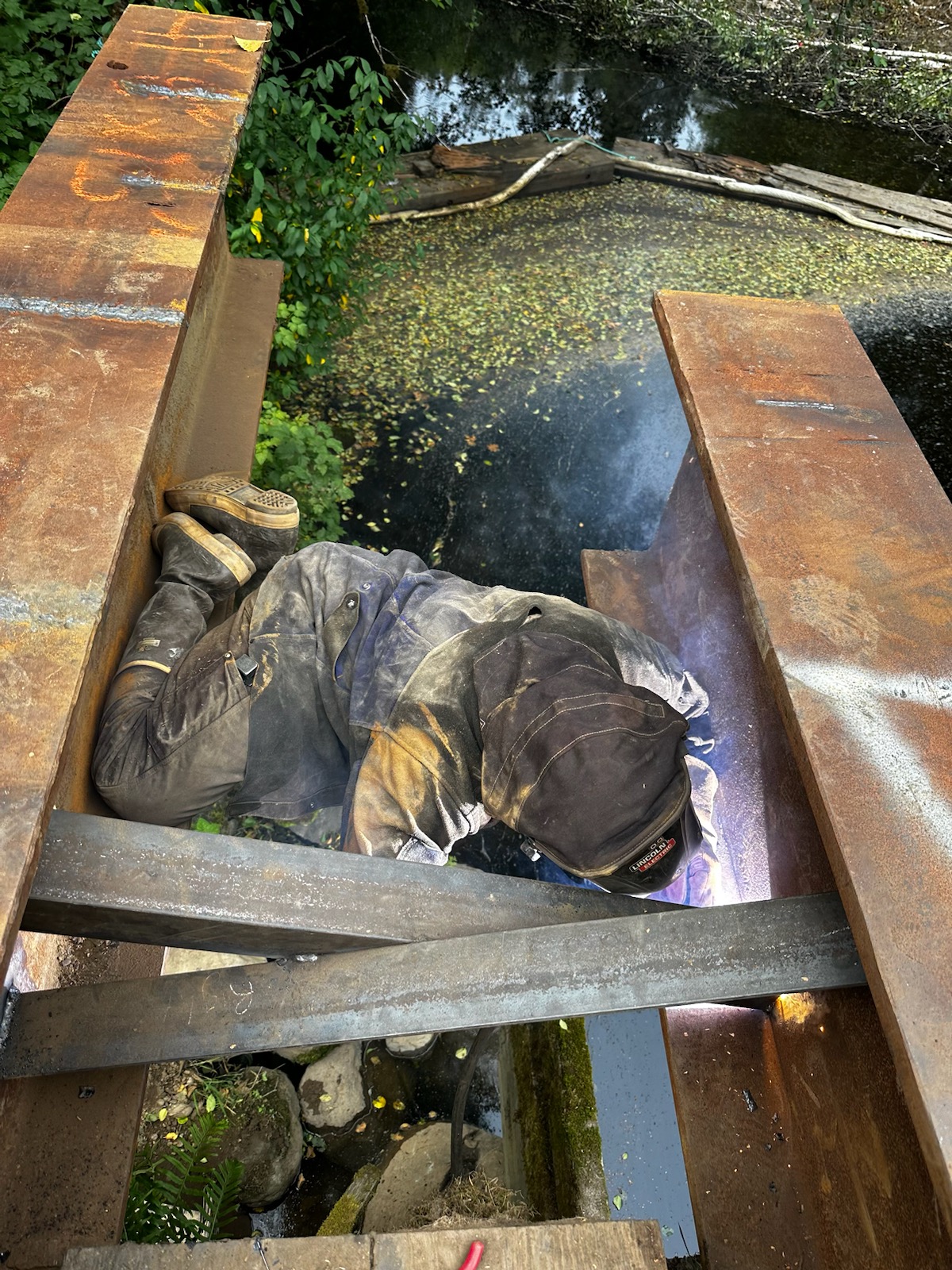
“If you’re on the fence about going to college, GHC is a great local resource that helped make great changes in my life. The faculty and staff were all awesome.There was a ton of support navigating programs that helped with a lot of the cost. I attended the welding program from 2020-23. Graduated in December and had a job in April applying the trade and on my way.”
Deleak Hubbard – GHC Class of 2024
“I grew up in the small town of Raymond WA. I knew I wanted to become a welder because I heard they made good money and I wanted to make my family proud. It’s always been a dream of mine to help my parents because they gave me everything growing up as a child. Now I am able to give back to my parents. At first I didn’t know where I wanted to go until I
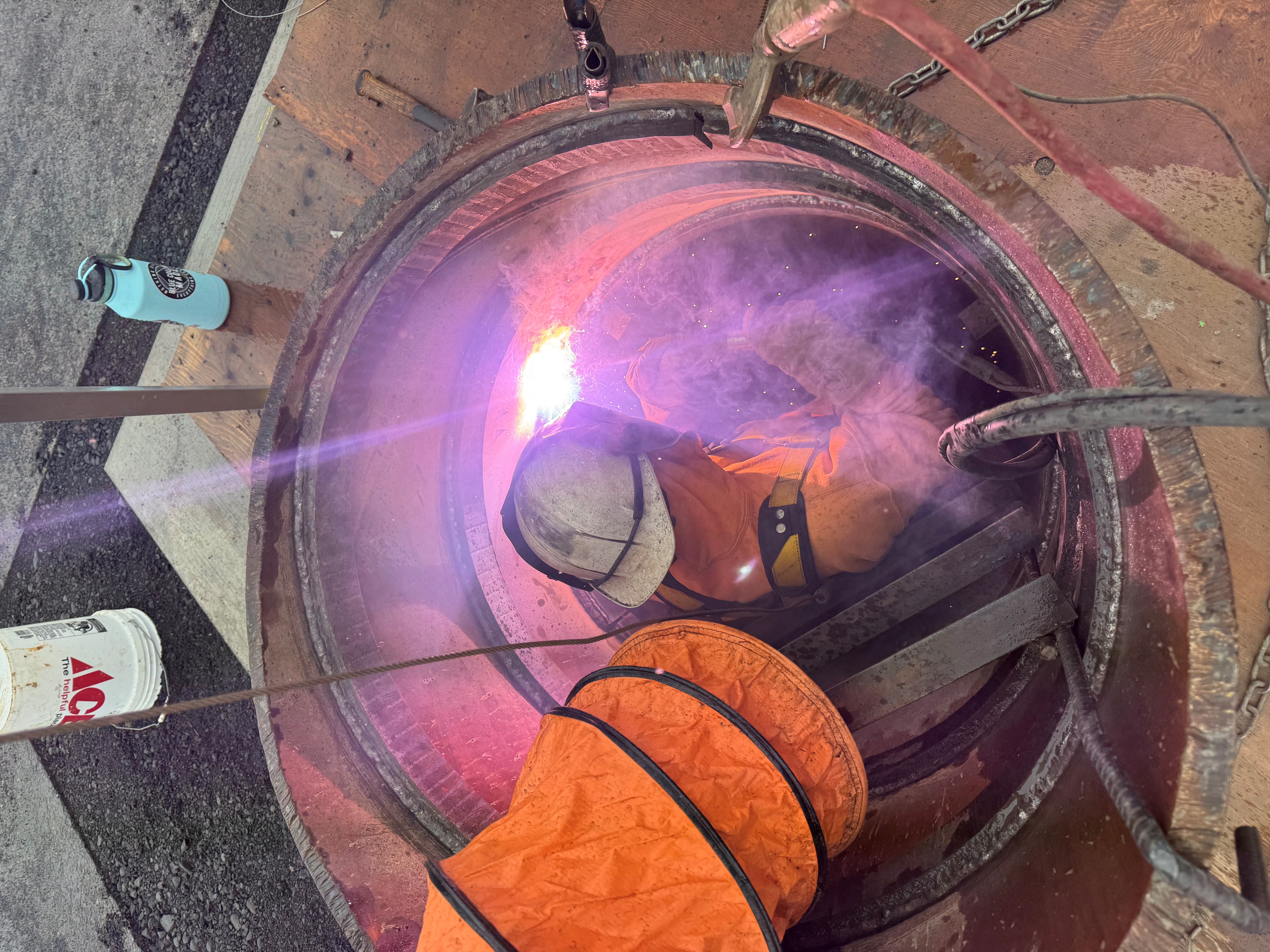
heard about the welding program here at Grays Harbor College and all the great opportunities it had to offer. I came right into the welding program straight out of high school and I took the Construction Option as a student from 2022-2024. In my last quarter I completed 5 WABO certifications with my biggest ones being my flux cored all position, a flux cored Seismic Restricted Access, and my Stick all position certification. After that I went straight into the Union Ironworkers Local 86, then I got dispatched to Rognlins here in Aberdeen. Throughout my journey I have already learned so much but since I was in the welding program I definitely had my foot in the door. It gave me an opportunity to shine in the field because apprentices don’t normally get to weld but since I had my certifications they let me. Definitely a lot of challenges I’d say, but I’ve learned to adapt and overcome and grow as an Ironworker. It wasn’t easy at first but I made it happen. I want to thank the welding program because it didn’t teach just welding it taught me how to fix tools, welders, etc. It has made me a more viable apprentice. Being in the trade has taught me it is always go, go, go, always look for the next thing to do because there is always something that can be done or picked up. My journeyman has told me always look busy and be productive and you will have a job, but the most important thing is just showing up on time. I’ve really been taking everything he has told me to heart because I want to be the best well rounded Ironworker possible.”
Harley Figueroa – GHC Class of 2023
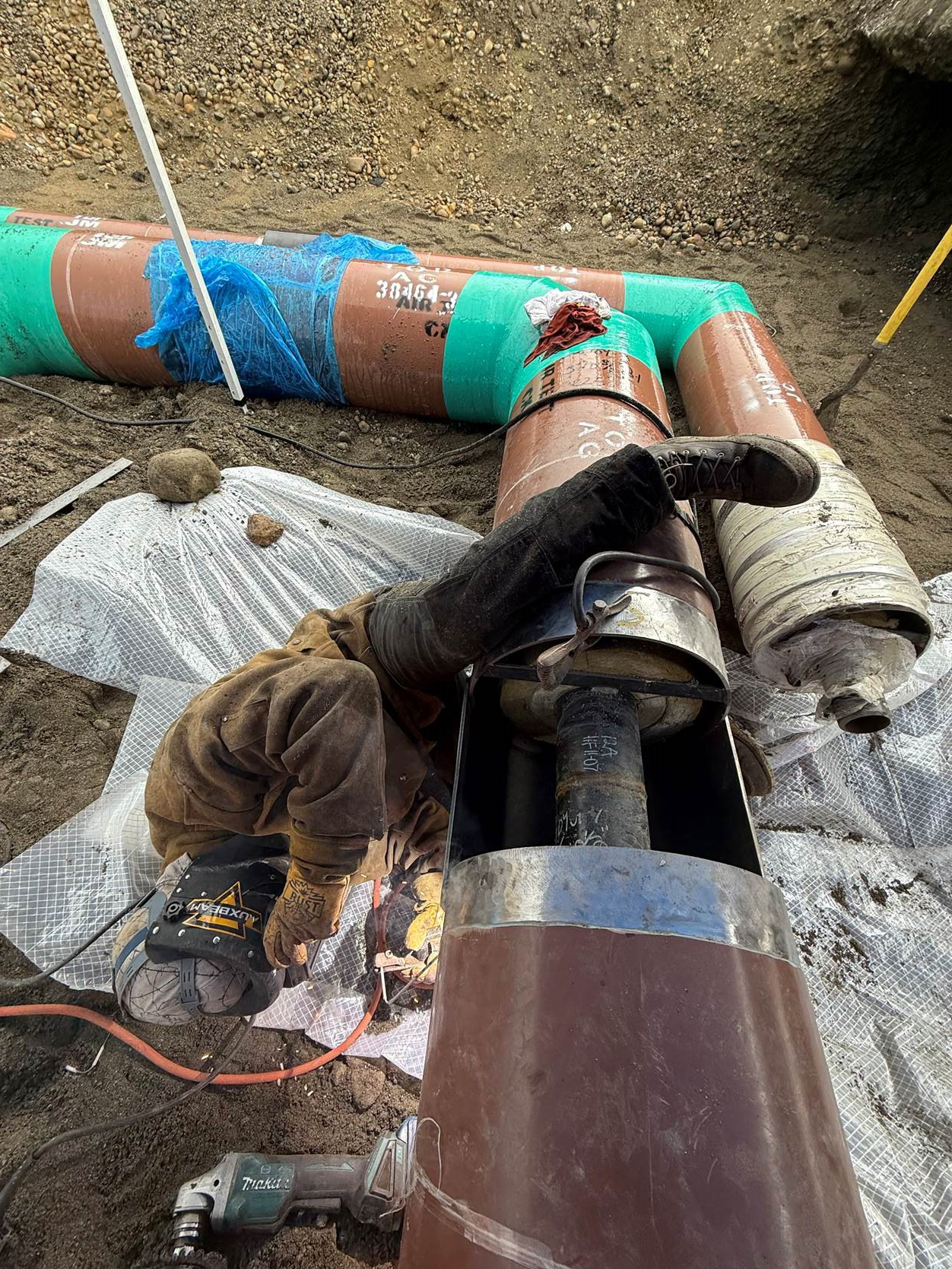
“I attended Grays Harbor College in 2021-2023. I studied Welding Tech and during my tenure I learned many skills and earned various certifications which have greatly helped me post-graduation in the workforce. I am pursuing a career with the Local 26 Plumbers and Pipefitters as a pipe welder/pipefitter. I would highly recommend this program as it emulates a real work environment and challenges you every day. If you can endure these challenges, you will graduate with all the skills you need to be successful in your chosen career.”
Cristal Venegas – GHC Class of 2023
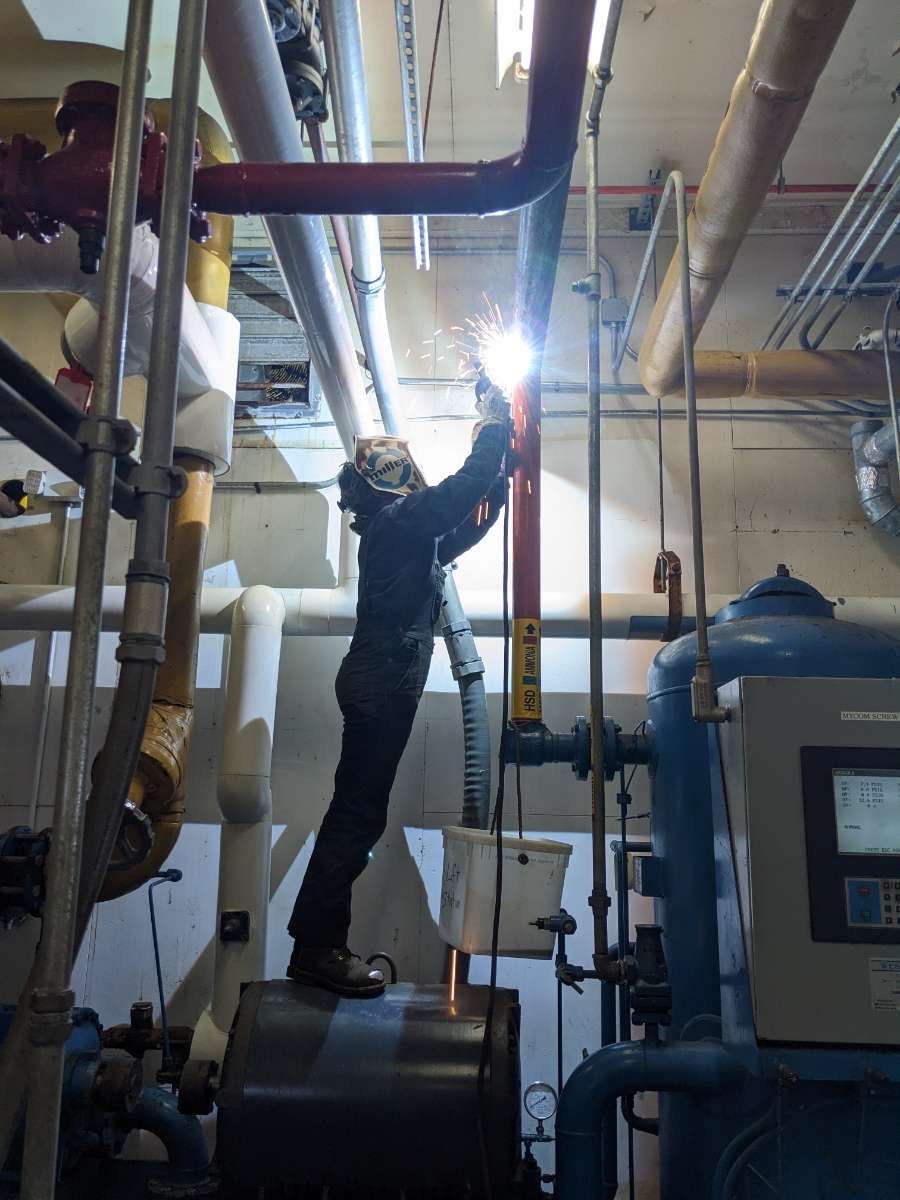
Jessie Olson – GHC Class of 2023
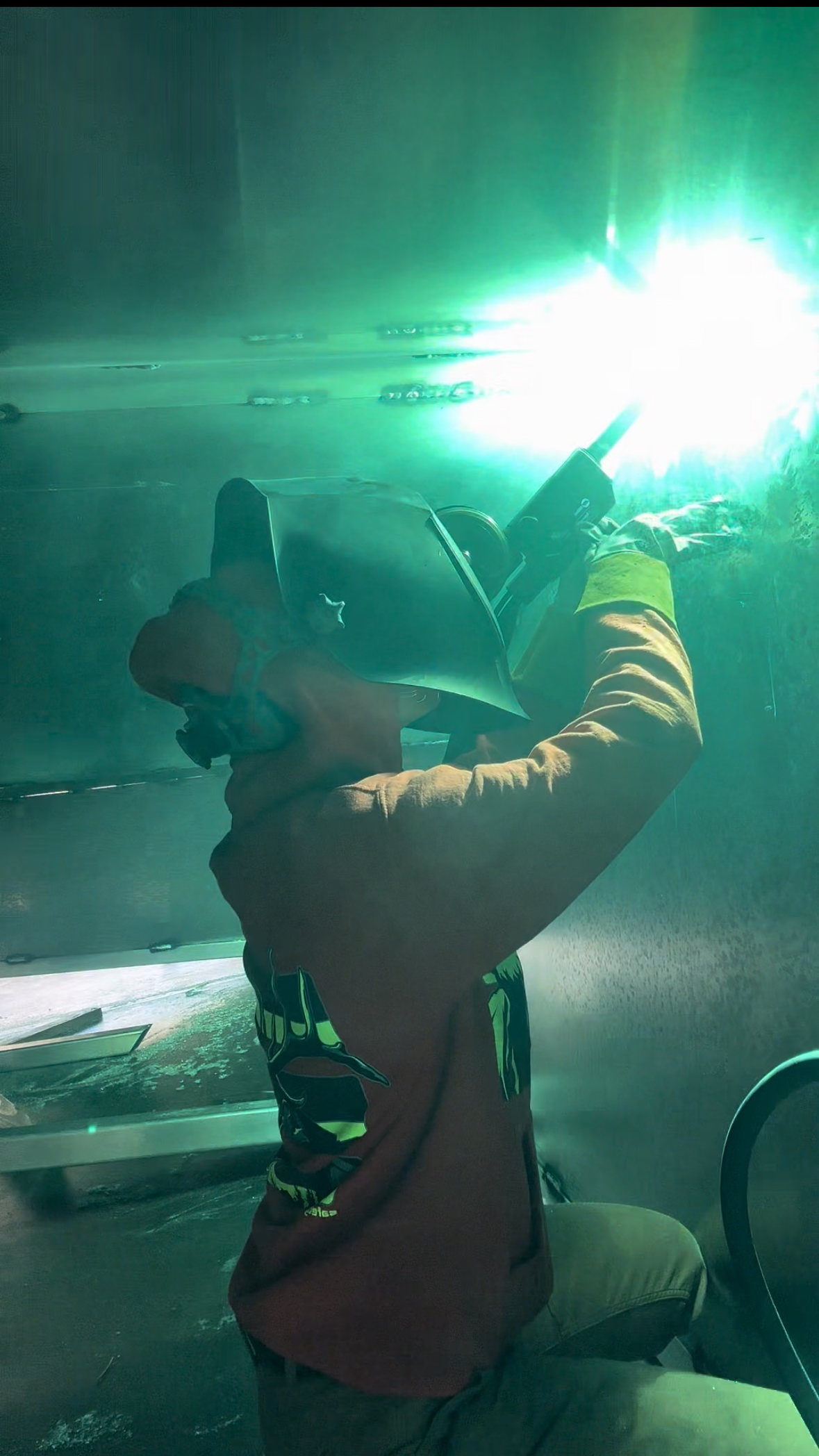
“I achieved my associates in Welding Tech during 2021-2023 and in that time I learned more than what I thought I was going to. I am thankful everyday when I am in the field that I went through the program that Rod McDonald has intricately constructed over the last 25 years to prepare students for the industry. I graduated with multiple certifications and have gone on to achieve more in the field. I am currently pursuing a career with the Local 26 Plumbers and Pipe fitters as a Pipe Welder/Pipe Fitter. Going through the program was the hardest, most rewarding and beneficial thing to I did for my career choice and I wouldn’t change the knowledge I have for anything.”
This program is designed for licensure/certification in the State of Washington. Grays Harbor College cannot guarantee the transferability of licensure, certificate, or credential to another state.